Lately I’ve been trying to make sense of something that feels contradictory.
Financial systems today are technically extraordinary. Payments move instantly, credit decisions happen in seconds, and the infrastructure behind it all is incredibly sophisticated, but still, the way many people experience money still feels confusing and stressful.
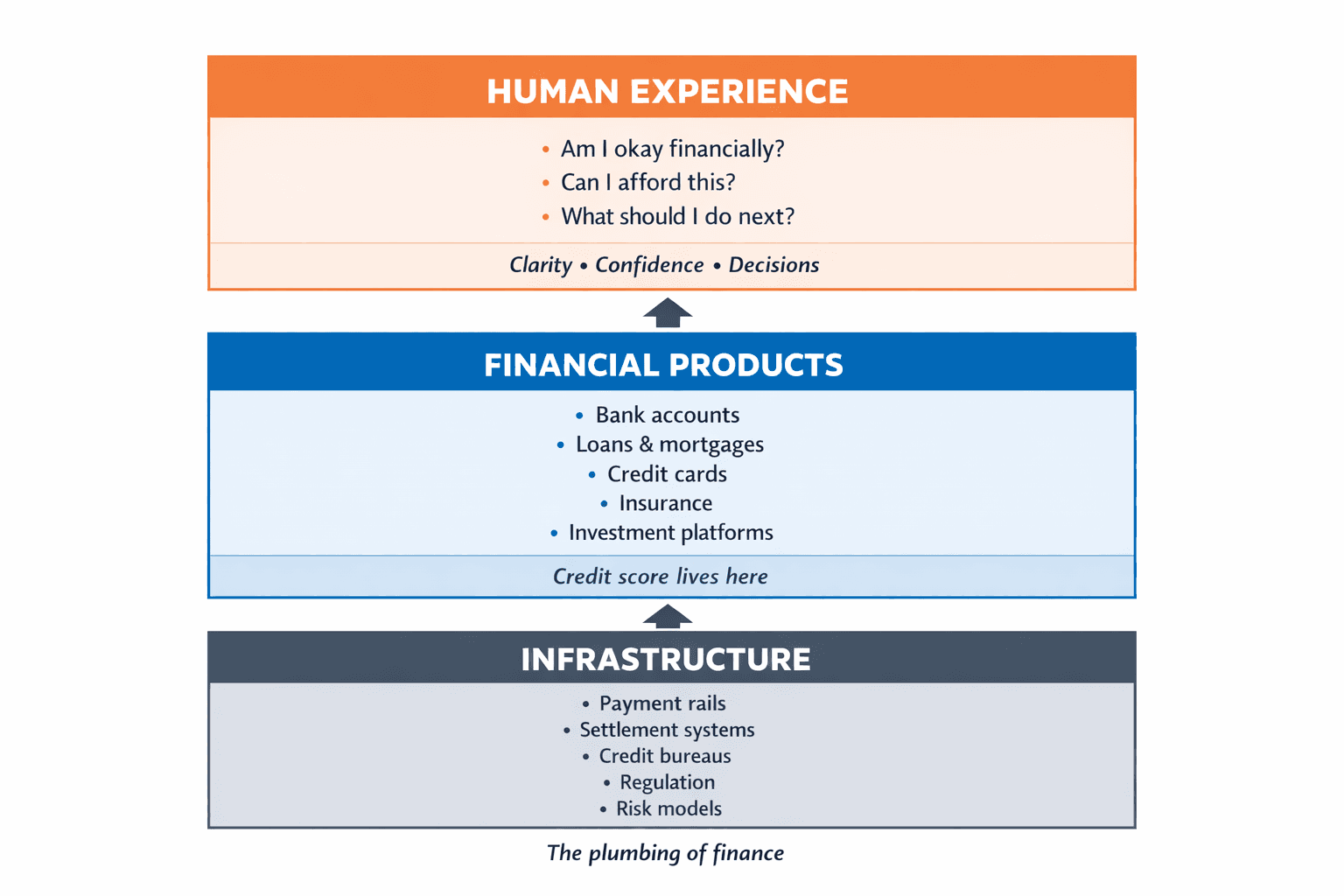
One way I’ve started thinking about it is in terms of layers.
At the bottom sits the infrastructure of finance. Payment networks, settlement systems, credit bureaus, regulatory frameworks. Most people never see this layer, but everything depends on it.
Above that are financial products. Accounts, loans, mortgages, credit cards, insurance. This is where most banks and fintech companies operate, designing products and managing risk. Things like credit scores belong here too.
But when people think about their money, they’re usually not thinking about infrastructure or products. They’re asking something much simpler.
Am I okay financially?
Can I afford this?
What should I do next?
That’s a different layer entirely: the experience of money.
And the more I reflect on it, the more it seems that this is where many of the real gaps sit.
Financial systems have become very good at moving money and building products. Helping people understand where they stand is a different challenge altogether.
Go Back